Sight word games for high frequency words that slow reading down
Use sight word lists, high frequency word lists, worksheets, and reading pages for short games that help kids practice common words, automatic recognition, reading fluency, and confidence
Common words can look simple and still slow a child down. WordyKid helps your child repeat the sight words and high frequency words that keep appearing in classwork and reading pages until they feel more familiar.
Practice the small words that decide whether reading feels smooth.
Common words get faster with repetition
These figures are based on activity recorded in WordyKid and update automatically. No personal information is shown.
When sight words are still not automatic
Sight words and high frequency words show up everywhere, which makes it frustrating when they still slow reading down.
WordyKid starts with the worksheet, reading page, sight word set, or classroom word list your child already has. That makes the practice relevant, easier to trust, and easier to repeat at home.
Parents can use the same classroom words for short interactive practice that supports recognition, fluency, and confidence.
Practice the words that keep interrupting fluency
This is not one isolated activity. It is a practical way to repeat the same common words without losing focus on the words that matter most.
Children keep practicing the exact sight words and high frequency words they need. Parents keep the context, the progress history, and a clearer view of which words still need repetition.
What starts as homework support can become a more consistent reading routine with less friction and clearer progress.
Practice common words from the work children already see
Sight word and high frequency word practice works best when it is simple enough to repeat and tied to the words a child is already seeing in reading and classwork.
Some families call them sight words. Others say high frequency words, Dolch words, Fry words, or common word lists. The need is usually the same: repeated exposure to the real words children see again and again in reading and classroom work.
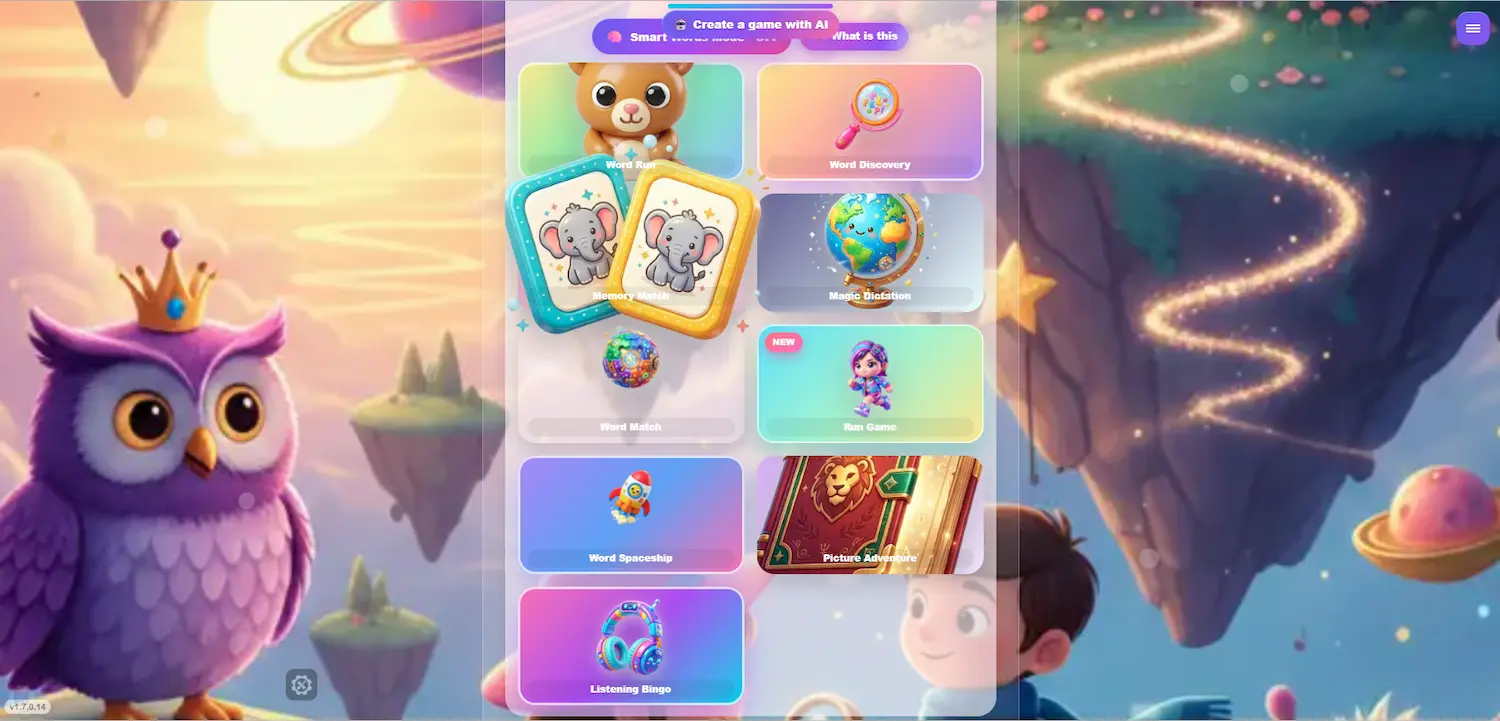
WordyKid is designed for that real use case. It helps families work with actual classroom material instead of relying only on fixed word libraries.
A better way to practice sight words at home
Static review can help, but many children lose focus when the format never changes. Practice becomes much easier to continue when the same important words appear in short game rounds instead of only in flat drills.
With WordyKid, the words stay relevant because they come from the list or page your child is already reading. The experience stays lighter because families can reuse the same word set across different game flows.
That combination matters: relevant words, repeat exposure, saved progress, and a format children are more willing to revisit.
Common-word practice for early reading
Parents can use this when a child needs sight word games, high frequency word games, common word practice, sight word review, reading fluency support, or a practical way to repeat school words at home.
It is especially helpful for families who already have worksheets, take-home reading pages, printed word lists, or school homework and want a more engaging way to repeat the same words.
Practice Fry words, Dolch words, and grade-level word lists
Families may bring home Fry words, Dolch words, kindergarten sight words, kindergarten high frequency words, 1st grade word lists, printable worksheets, or teacher-made reading pages. WordyKid keeps the focus on the actual words your child needs instead of forcing every family into one fixed list.
Use the school list you already have, then repeat those words through short game rounds that support automatic word recognition and reading fluency.
If sight words are only part of today's work
Some families start with sight word games and high frequency word games, then need broader reading support across related pages.
Questions about sight words and high frequency words
Can kids play sight word games with their own school words?
Yes. Use the exact sight word list, high frequency word list, worksheet, reading page, or school material your child got at school. WordyKid turns those words into short games that are relevant and level-matched.
Do sight word games help with reading fluency?
Yes. Sight word games and high frequency word games help children repeat common words until recognition becomes faster. They work especially well when the words come from material your child is already learning at school.
Are high frequency words the same as sight words?
They overlap, but they are not always identical. Many sight words are high frequency words, and WordyKid can support high frequency words, sight words, Dolch words, Fry words, and other common school word lists from real material.
Is sight word practice ad-free?
Yes. No ads, no external links, and no chat with strangers. It is designed to be a calm, parent-friendly environment.
Can my child practice common words independently?
Yes. It is built for independent play with simple interactions. Parents can feel good about this as screen time that turns into real practice.
Does it work without an app install?
Yes. It runs fully in the browser on phones, tablets, and computers.
What if my child needs more automatic word recognition?
That is where sight word practice and high frequency word practice can help. WordyKid keeps attention on the words children meet again and again, so recognition can get faster step by step.
Can I see which common words are improving?
Yes. Sessions are saved, and you can see clear stats on progress, wins, and vocabulary growth over time.
Can more than one child practice common words?
Yes. You can create multiple child profiles in one family account, so each child gets their own progress and history.
Will it work with school worksheets and printed word lists?
Yes. If the photo is reasonably clear and not blurry, WordyKid can work with real student worksheets, reading pages, and printed common word lists.
Which practice languages are included?
Currently: English, Hebrew, Arabic, Spanish, and Russian. More languages are coming.
How often should we repeat common words?
A good starting point is 10 to 15 minutes a day. WordyKid is designed for short, repeatable practice sessions that are easy to fit into a routine.