Start with real school material
Use your child's real school words, worksheets, and reading pages.
Use the worksheet, reading page, school text, or homework passage for short games that help kids practice reading fluency, vocabulary, comprehension, and confidence
When a reading page feels too long, another generic game does not solve the problem. WordyKid starts with the page your child already has and makes the next pass feel smaller.
A calmer way to come back to the same page without another argument.
These figures are based on activity recorded in WordyKid and update automatically. No personal information is shown.
Reading practice can fall apart when the page feels long, the child feels watched, and the parent is trying to keep the evening moving.
WordyKid starts with the worksheet, reading page, homework page, or school text your child already got from school, then breaks practice into short reading game rounds.
The result is more time with the right text, less friction at the table, and progress parents can actually see.
A reading page can feel less intimidating when it becomes a few short rounds instead of one long sit-down session.
Your child keeps practicing the exact reading material that matters, while progress stays saved across sessions. Parents can see what improved, where more support is needed, and how consistency builds over time.
What starts as school reading practice can become a clearer and calmer routine at home.
Reading practice should match the pages and school material children are already asked to work on.
WordyKid helps parents use worksheets, reading pages, and school texts they already have at home for short reading games with saved progress and repetition that feels easier to continue.
It started with a simple frustration: kids already had reading homework, worksheets, and school pages, but practice at home still felt hard to start.
WordyKid keeps practice close to those pages, in a format kids are more willing to repeat.
Reading support may mean fluency practice, comprehension, vocabulary review, or simply making a classroom reading page manageable enough to revisit at home.
Families can work with classroom material instead of starting over with a random reading passage.
When the practice uses the same pages and texts children already see in school, it becomes easier to repeat and easier to connect to real reading progress.
Reading worksheets, fluency work, comprehension activities, and vocabulary practice all work better when they stay connected to the material a child is already expected to read.
WordyKid is built around that real use case. Instead of locking families into one fixed library, it helps them practice from real worksheets, reading pages, homework sheets, and school texts already used at home and at school.
That makes the practice feel more targeted and more useful over time, especially when children need stronger fluency, better comprehension, and more confident reading.
Static review can help, but many kids lose focus when the format never changes and the practice feels disconnected from classroom work.
WordyKid keeps the same important reading material but gives families a more interactive way to revisit it. The page stays relevant because it comes from class, and the experience stays lighter because the same text can appear through different short game flows.
That combination matters: relevant material, repeat exposure, saved progress, and a format that children are more willing to continue.
Parents can use this when a child needs practice with a reading page, short passage, vocabulary from class, or school text that feels hard to finish.
It is also for families who already have a worksheet, reading page, or school text in hand and do not want to rebuild everything from scratch in another tool.
If your child is working through reading worksheets, take-home pages, classroom reading passages, or repeated home review, this is where WordyKid fits naturally.
If your child is stuck on sounds, sight words, or common words inside the reading page, choose the next kind of help.
Public reading games and basic practice in English and additional languages.
Use every worksheet, reading page, homework page, or school text for personalized reading games, with deeper parent stats and full progress history.
Start with the material your child already has, then keep practice short and easy to revisit.
Use your child's real school words, worksheets, and reading pages.
Upload a photo, paste text, or add homework words to create playable practice.
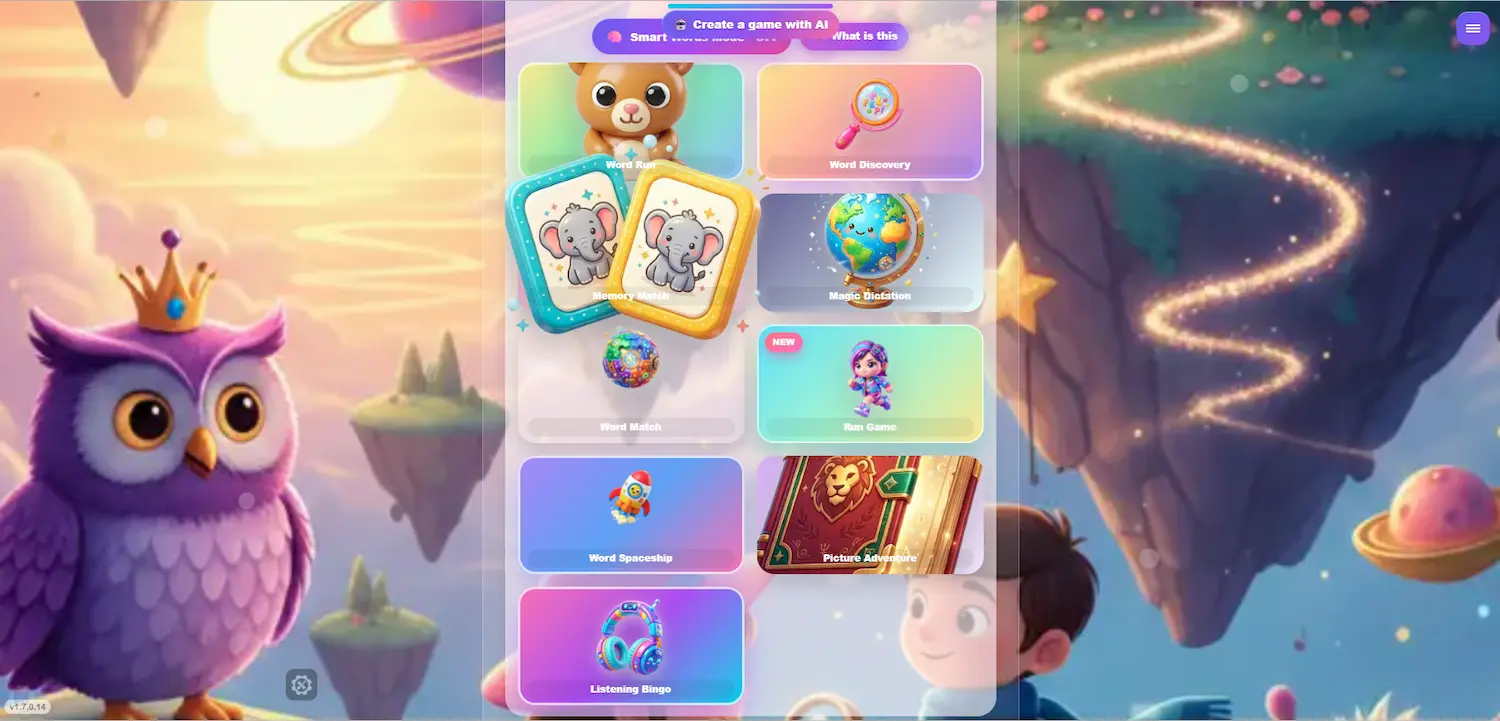
Practice the same material across multiple short game modes.
Open WordyKid on a phone, tablet, or computer and revisit your practice history over time.
Yes. Use the exact worksheet, reading page, homework page, or school text your child got at school. WordyKid uses it for practice that is relevant and level-matched.
Yes. Kids can practice reading fluency, vocabulary, and confidence through short game rounds. It works especially well when you use real material your child is already using at school.
Yes. No ads, no external links, and no chat with strangers. It is designed to be a calm, parent-friendly environment.
Yes. It is built for independent play with simple interactions. Parents can feel good about this as screen time that turns into real practice.
Yes. It runs fully in the browser on phones, tablets, and computers.
That is where short, repeatable reading practice can help. WordyKid keeps the assigned page close, so children can build fluency and confidence step by step.
Yes. Sessions are saved, and you can see clear stats on progress, wins, and vocabulary growth over time.
Yes. You can create multiple child profiles in one family account, so each child gets their own progress and history.
Yes. If the photo is reasonably clear and not blurry, WordyKid can work with real student worksheets, reading pages, and printed school text.
Currently: English, Hebrew, Arabic, Spanish, and Russian. More languages are coming.
A good starting point is 10 to 15 minutes a day. WordyKid is designed for short, repeatable practice sessions that are easy to fit into a routine.