Start with real school material
Use your child's real school words, worksheets, and reading pages.
Use first grade sight word lists, high frequency words, Dolch words, worksheets, and reading pages for short games that help kids practice word recognition, reading fluency, confidence, and weekly school words
First grade word lists move quickly, and parents often feel the pressure before kids can explain what feels hard. WordyKid keeps practice close to the list your child brought home this week.
A manageable way to repeat the list before it becomes another evening battle.
These figures are based on activity recorded in WordyKid and update automatically. No personal information is shown.
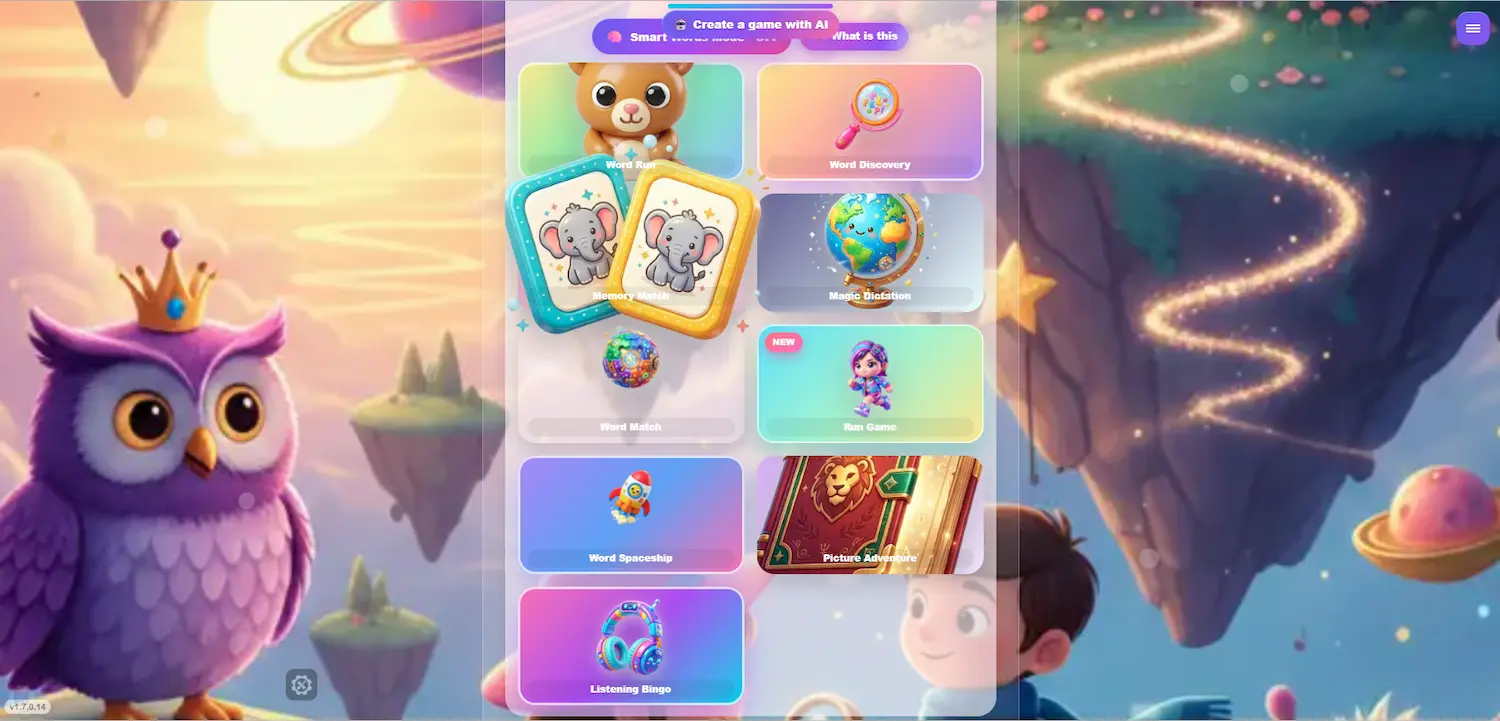
First grade sight word practice carries more pressure than kindergarten because reading expectations rise fast. Children are expected to recognize more words automatically, read more smoothly, and move with more confidence through classroom text.
WordyKid starts with the exact first grade sight word list, high frequency word set, worksheet, or reading page your child already got from school.
That makes the practice relevant, easier to trust, and more likely to fit naturally into homework time, after-school review, and everyday first grade reading routines.
A first-grade word list is easier to repeat when practice is short, familiar, and saved for next time.
Your child keeps practicing the exact first grade words that matter, while progress stays saved across sessions. Parents can see what improved, which words still need work, and how repetition builds over time.
What starts as first grade sight word homework can become a clearer, calmer reading routine.
First grade sight word practice should match the words children are asked to work on at school.
WordyKid helps parents take the worksheets, sight word lists, high frequency words, and reading pages they already have at home for short interactive practice with saved progress and repetition that feels easier to continue.
It started with a simple frustration: kids already had homework, reading pages, and word lists, but practice at home still felt hard to repeat.
WordyKid keeps practice close to the school list in games that feel lighter for kids and more useful for parents.
Public language games and basic practice in English and additional languages.
Turn every first grade sight word list, high frequency word set, worksheet, or reading page into a personalized game, with deeper parent stats and full progress history.
Start with the material your child already has, then keep practice short and easy to revisit.
Use your child's real school words, worksheets, and reading pages.
Upload a photo, paste text, or add homework words to create playable practice.
Practice the same material across multiple short game modes.
Open WordyKid on a phone, tablet, or computer and revisit your practice history over time.
Yes. Use the exact first grade sight word list, worksheet, reading page, or school material your child got at school. WordyKid uses it for practice that is relevant and level-matched.
Yes. Kids can practice high frequency words, early reading fluency, and word recognition through short game rounds. It works especially well when you use real material your child is already learning from school.
Yes. WordyKid is built for real word lists and school material, so it can support many kinds of first grade sight word practice as long as the words are in the material you use.
Yes. No ads, no external links, and no chat with strangers. It is designed to be a calm, parent-friendly environment.
Yes. It is built for independent play with simple interactions. Parents can feel good about this as screen time used for real practice.
Yes. It runs fully in the browser on phones, tablets, and computers.
That is where first grade sight word practice can help. WordyKid keeps short, repeatable practice tied to the weekly list so children can build automatic word recognition and reading confidence step by step.
Yes. Sessions are saved, and you can see clear stats on progress, wins, and vocabulary growth over time.
Yes. You can create multiple child profiles in one family account, so each child gets their own progress and history.
Yes. If the photo is reasonably clear and not blurry, WordyKid can work with real student worksheets, reading pages, and printed first grade word lists.
Currently: English, Hebrew, Arabic, Spanish, and Russian. More languages are coming.
A good starting point is 10 to 15 minutes a day. WordyKid is designed for short, repeatable practice sessions that are easy to fit into a routine.