Start with real school material
Use your child's real school words, worksheets, and reading pages.
Turn spelling lists, phonics words, sight words, reading pages, and vocabulary into short practice games with immediate feedback, small wins, and real learning material
When a child has ADHD or attention challenges, the hard part is often not knowing what to practice. It is getting the practice started, keeping it short, and making repetition feel less like another worksheet.
WORDYKID is not an ADHD treatment. It is a practice layer that helps parents turn the words their child already needs into shorter, more interactive review.
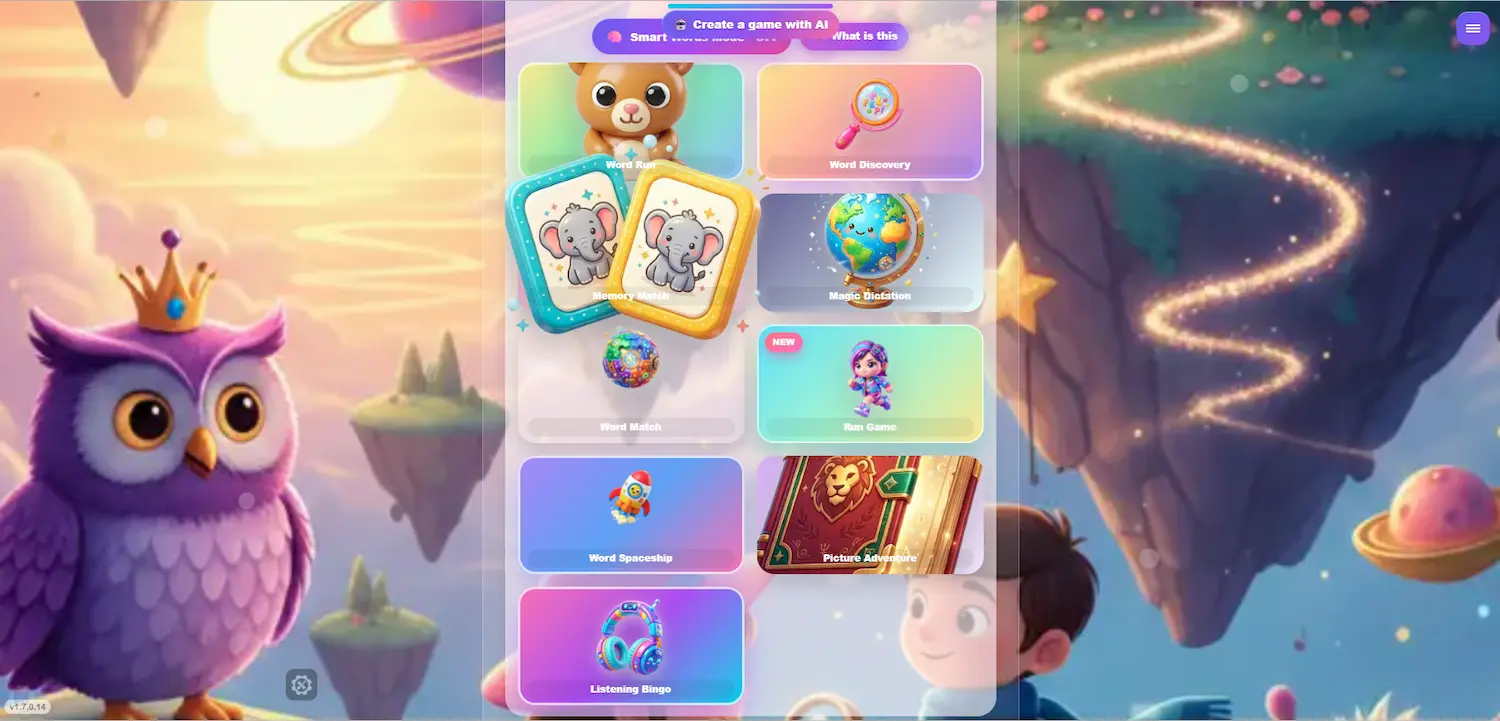
For many families, reading or spelling practice becomes a battle before the child has even tried the first word.
WORDYKID starts with the exact material your child already needs: spelling words, phonics patterns, sight words, vocabulary, or a reading page.
The goal is not to replace instruction. The goal is to make the review short enough, clear enough, and interactive enough to repeat.
A long worksheet can feel too big. A small game round gives the child a clearer starting point.
Your child can practice the same important words in different ways while progress stays saved across sessions. Parents can see what was practiced, what improved, and which words may still need more repetition.
What starts as a hard homework moment can become a smaller, calmer practice routine.
Research on ADHD and learning points again and again to the importance of immediate feedback, frequent reinforcement, short tasks, repetition, and engaging practice.
WORDYKID uses those ideas for reading and spelling practice. It does not diagnose ADHD, treat ADHD, or replace medical, therapeutic, school, or specialist support.
Parents deserve honest wording. A learning game can make practice more doable, but it should not promise to fix attention, behavior, or ADHD symptoms.
That is why WORDYKID is positioned here as an ADHD-friendly practice layer, not as an ADHD solution.
A child may still need phonics, sight words, spelling, vocabulary, or reading practice even when long worksheets and homework sessions are hard to start.
The goal is the same: keep the real practice, but make the format easier to start and repeat.
WORDYKID fits that need by keeping practice connected to real words while making each round smaller and easier to start.
Some families need CVC words and letter sounds. Others need spelling lists, high-frequency words, vocabulary from a book, or words from a worksheet.
WORDYKID is built around that real use case. Instead of locking families into one fixed library, it helps them practice from the material they already have.
That makes the practice more targeted, especially when the child needs repetition but resists another worksheet.
Static review can help, but many kids lose focus when the format never changes and the reward feels too far away.
WORDYKID keeps the same important words but gives families a more interactive way to revisit them. The adult still controls the learning material, and the child gets a shorter path into practice.
That combination matters: real material, repeat exposure, immediate feedback, saved progress, and a format children may be more willing to continue.
Use this when a child needs practice with spelling words, phonics worksheets, sight words, reading vocabulary, or take-home review.
It is also for families who already have a curriculum, tutor, teacher plan, IEP, or school support and simply need a better way to practice the words between lessons.
If your child has ADHD or attention challenges, WORDYKID can help turn required review into shorter rounds without claiming to treat ADHD.
If your child also needs support with phonics, sight words, spelling, or reading fluency, choose the practice path that matches the work in front of you.
Open games and basic practice for reading, spelling, phonics, vocabulary, and early word review.
Use spelling lists, reading pages, phonics words, sight words, book vocabulary, or homework words for personalized practice games with parent-visible progress.
Start with the material your child already has, then keep practice short and easy to revisit.
Use your child's real school words, worksheets, and reading pages.
Upload a photo, paste text, or add homework words to create playable practice.
Practice the same material across multiple short game modes.
Open WordyKid on a phone, tablet, or computer and revisit your practice history over time.
No. WORDYKID is not an ADHD treatment, therapy, diagnosis tool, medical device, or replacement for professional support. It is a learning practice platform that can make reading, spelling, phonics, sight word, and vocabulary review shorter and more interactive.
Well-designed practice games can be helpful because they use short tasks, immediate feedback, small goals, and repetition. WORDYKID uses those ideas for learning practice, but it does not claim to treat ADHD or improve ADHD symptoms.
Yes. WORDYKID is an educational practice platform. It is not an ADHD treatment, diagnosis tool, therapy, medical device, or replacement for professional support.
Yes, it can support reading practice when you use real material your child is already learning, such as phonics words, CVC words, sight words, high-frequency words, or vocabulary from a reading page.
Yes. Parents can enter or upload spelling words and turn them into short game rounds. That can feel lighter than another worksheet while still keeping the practice focused on the exact words that matter.
WORDYKID can make review feel different by turning the same words into interactive practice. It does not remove the need for instruction, but it can make repetition easier to start and easier to repeat.
WORDYKID is designed for small practice rounds, so parents can choose a few focused minutes instead of one long practice session.
No. WORDYKID should be used as a practice layer beside a curriculum, teacher, tutor, school plan, intervention, or professional support when those are needed.
Yes. WORDYKID is designed as a calm practice space with no ads, no external links, and no chat with strangers.
Yes. The interactions are simple enough for many children to use independently, while parents can choose the words and keep the practice aligned with school or homeschool work.
Yes. If the list or page is clear, parents can use spelling lists, phonics worksheets, sight word lists, vocabulary pages, and reading homework as the starting point for practice.
Yes. A family can create separate child profiles so each child has their own words, practice history, and progress.