
Vocabulary · Teacher and parent guide
Vocabulary Activities for Any Word List
Effective vocabulary activities help students connect a word to meaning, examples, related ideas, and real contexts. Start with the words already assigned in class, choose one short activity, and finish by asking the student to explain or use a word without looking at the list.
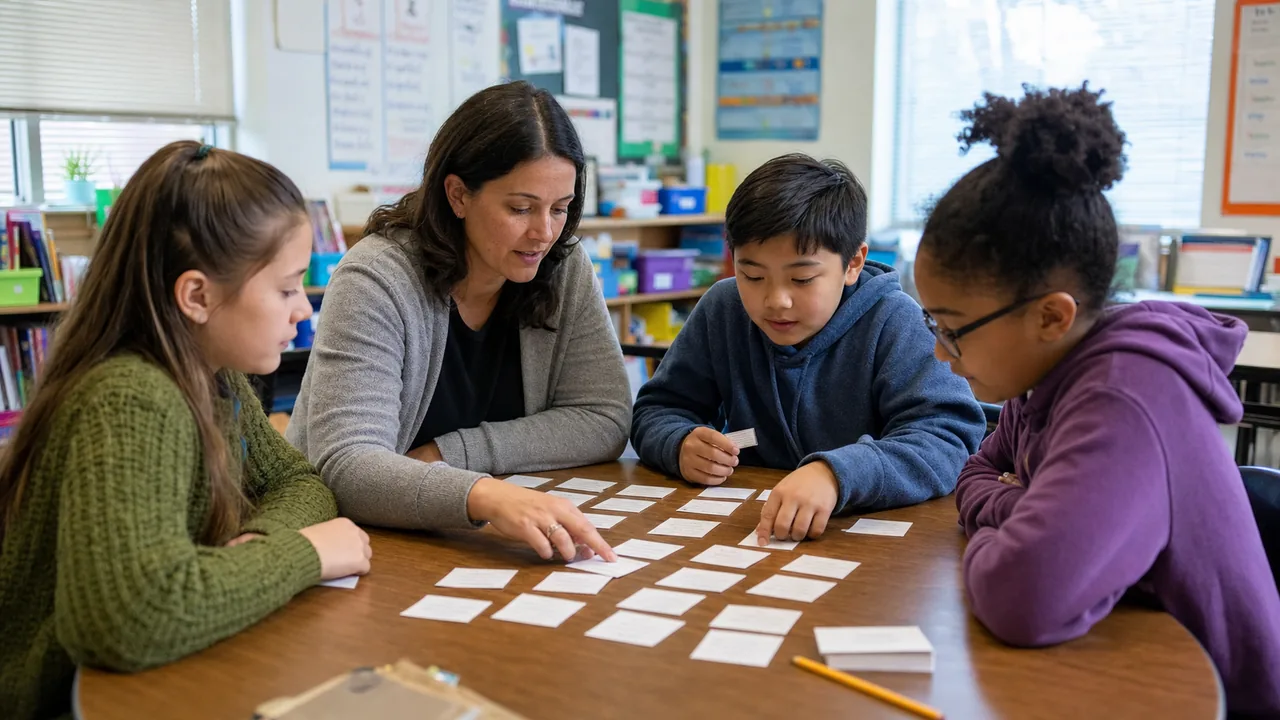
The quick answer: use the word, do not just copy it
A useful vocabulary activity asks the student to make a meaning decision. Instead of copying a definition again, the student might choose an example, reject a non-example, connect two words, repair a sentence, draw a quick representation, or explain a word from memory.
A repeatable four-step routine
- Keep the assigned list. Use the words from the current book, unit, worksheet, or study guide.
- Select a focus set. Choose four to eight words for one short round when the full list is long.
- Make a meaning decision. Sort, compare, explain, sketch, or use each word in context.
- Finish without the list. Ask for a meaning, example, connection, or sentence from memory.
What the evidence supports
The U.S. Department of Education's What Works Clearinghouse recommends teaching a focused set of academic words intensively across several days with varied activities for English learners in elementary and middle school. Reading Rockets likewise summarizes vocabulary guidance around repeated exposure, rich contexts, and active engagement rather than dependence on one method.
Those sources do not prescribe the exact eight activities below. The routines in this guide are practical ways to apply the broader principles: work with a manageable set, revisit the words, make students think about meaning, and use the words in more than one context.
Choose a vocabulary activity by the learning goal
Use one activity that matches what the student needs to do with the words. More activities do not automatically create better practice.
| Learning goal | Try this | What to listen for | Time |
|---|---|---|---|
| Check basic meaning | Example or non-example | A reason, not only a guess | 3-5 minutes |
| Build connections | Category or relationship sort | How the words belong together | 5-8 minutes |
| Use words in context | Sentence repair or mini scenario | A sentence that shows the meaning | 5-10 minutes |
| Prepare for a quiz | Retrieve, mix, and check | Which words still need support | 5 minutes |
| Use a real worksheet or photo | Turn the exact list into short games | Whether the activity keeps the class meaning | One short round |
Eight vocabulary activities for any class word list
1
Start with a quick know, unsure, or new sort
Read each word once and place it under know it, unsure, or new. Ask for one brief reason. A student who recognizes a word but cannot explain it should place it under unsure.
Use the result: Build the next practice round from the unsure and new groups.
2
Choose an example and a non-example
Give two situations and ask which one fits the word. For evaporation, compare a puddle slowly disappearing with water freezing into ice. Require the student to explain the choice.
Low-prep option: Say the two situations aloud instead of preparing cards.
3
Sort words by a meaningful relationship
Group terms by category, sequence, cause and effect, part and whole, positive and negative, or another relationship that fits the lesson. More than one sensible sort may be possible.
Meaning check: Ask the student to name the relationship for every group.
4
Write a student-friendly meaning, then add one detail
Restate the class definition in clear language without removing the important idea. Add one concrete example, feature, or connection. Compare the result with the teacher's material for accuracy.
Avoid: Replacing a precise subject meaning with a vague synonym.
5
Sketch the idea and label the connection
Make a fast sketch, diagram, symbol, or gesture that represents the meaning. Then add a short label explaining why it fits. Artistic quality is not the goal.
Recall check: Hide the word and use the sketch to retrieve it later.
6
Repair a sentence that almost works
Write or say a sentence that uses the target word incorrectly in one important way. The student corrects the sentence and explains the change. This reveals misunderstandings that a copied definition can hide.
Example: Change “A predator is an animal that is hunted” so the relationship is accurate.
7
Describe the word without saying it
One person explains the meaning, features, or examples while avoiding the target word. The listener identifies the word and gives a second example or connection.
Keep it rigorous: A clue should communicate meaning, not only the first letter or number of syllables.
8
Retrieve, mix, and check
Hide the list and ask for a meaning, example, or sentence. Mix the order so the student cannot rely on the worksheet sequence. Reveal the source, correct the response, and keep only missed words for the next round.
End here: The final retrieval check shows which connections are available without the list.
A four-day vocabulary plan using the same word list
A list of activity ideas is easier to use when each day has a purpose. Keep the full list assigned by the teacher, but use a smaller focus set of four to eight words for a short round. Move from understanding to connection, context, and retrieval instead of repeating the same definition task every day.
| Day | Learning purpose | Classroom or offline activity | Online or home follow-up |
|---|---|---|---|
| Day 1 | Find what is known | Sort words into know, unsure, or new. Verify each meaning in the textbook, worksheet, or teacher notes. | Say each focus word and give one accurate example. Keep the unsure and new words for the next round. |
| Day 2 | Build meaning connections | Use an example and non-example or a relationship sort. Ask the student to explain every choice. | Practice the same words in a short game, then ask for the meaning or an example of two words after the game ends. |
| Day 3 | Use words in context | Repair an inaccurate sentence or build a mini scenario that uses two or three related terms. | Use the current list, worksheet, reading page, or pasted text for another short round without replacing the assigned vocabulary. |
| Day 4 | Retrieve and narrow | Hide the source and ask for meanings, examples, or relationships in a mixed order. | Make the next practice set from missed words only. Do not replay the entire list when most words are already secure. |
Worked example: practice one science vocabulary list
Imagine a fifth-grade science list with these six words:
- Check the class meaning. Use the textbook, worksheet, or teacher notes as the source of truth.
- Make two relationships. Connect organism to habitat, and compare predator with prey.
- Add an example and non-example. A thick winter coat can be an adaptation; putting on a jacket for one afternoon is not an inherited adaptation.
- Repair one sentence. Correct “A habitat contains only one organism” and explain what can live there.
- Use three words together. “In this ecosystem, the owl is a predator and the mouse is prey.”
- Finish with mixed retrieval. Hide the list and ask for one meaning, one example, and one relationship in a new order.
The same sequence works with a social studies chapter, reading selection, or language-class list. Keep the source meaning and change the examples and relationships.
A five-minute vocabulary option
Five minutes is a practical short-round format, not a research-prescribed duration. Follow the teacher's directions and use more time when the lesson requires deeper reading, discussion, or writing.
Common vocabulary-practice mistakes
- Copying definitions without making a decision. Add an example, relationship, context, or explanation.
- Practicing too many words in one short round. Keep the full assignment, but focus extra practice on a manageable set.
- Using a sentence that does not reveal meaning. “I saw an ecosystem” is grammatical but does not show understanding.
- Letting a game reward speed alone. Points should follow a meaningful answer, example, or connection.
- Changing the class definition. Simplify language carefully and check the textbook or teacher material.
- Treating spelling and vocabulary as the same task. Correct spelling matters, but vocabulary practice must also develop meaning and use.
- Keeping every answer visible. Finish with a brief retrieval attempt after the source is hidden.
One way to reuse the real class material

Already have the class word list?
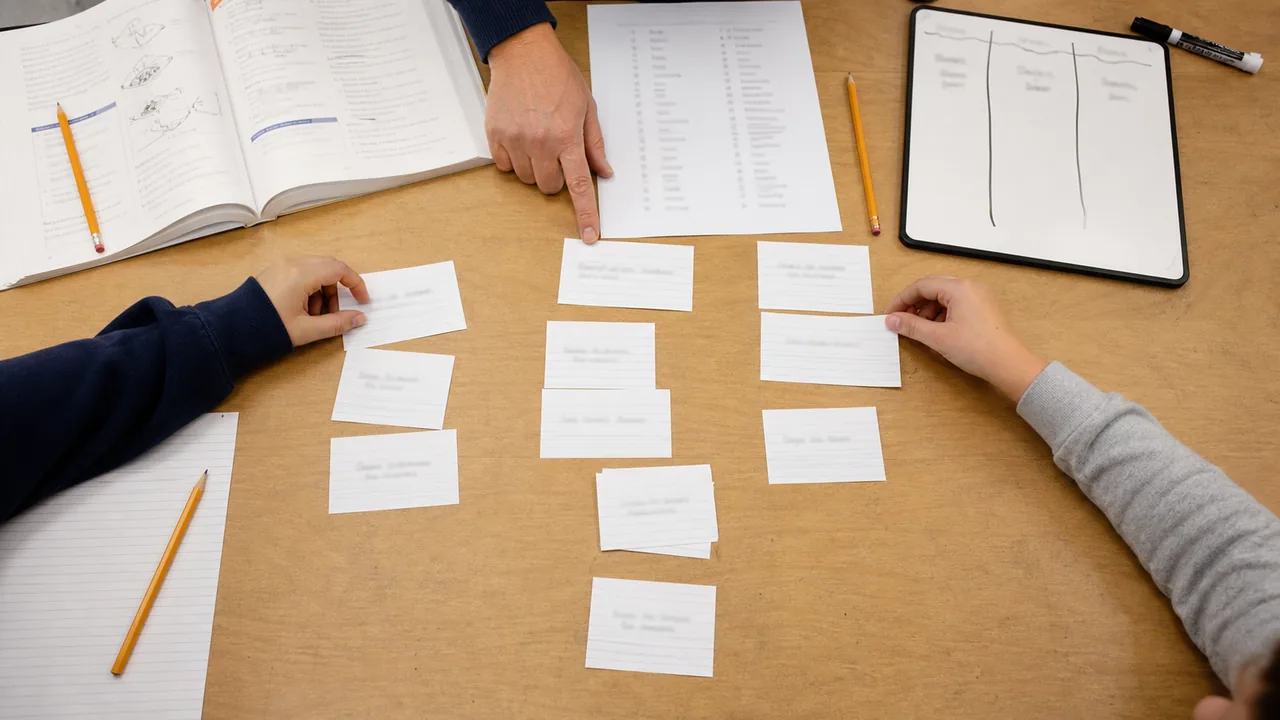
Use a photo, worksheet, reading page, or pasted list to build short vocabulary games from those exact words. Review the extracted list before practice so it stays aligned with the current lesson.
Practice the exact words from classThe same route can begin with a photo or a pasted word list.
Add the class material
Use a photo, page, or pasted list.
Check the words
Keep the terms assigned for this lesson.
Choose a short game
Practice the same list in a different format.
Reusable vocabulary-activity checklist
Use this checklist with the next class list, worksheet, chapter, or study guide.
Before practice
- Confirm the meaning expected in the current subject or lesson.
- Identify the words that are central, new, or still uncertain.
- Choose one learning goal: meaning, connection, context, or retrieval.
- Select an activity that fits the available time.
During practice
- Ask the student to explain a choice or connection.
- Use examples that match the learner's age and current lesson.
- Return to the class source when a meaning is unclear.
- Use the word in more than one context when time allows.
At the end
- Hide the list for one brief retrieval check.
- Correct inaccurate meanings, not only spelling.
- Keep a smaller set of missed words for the next round.
Questions teachers and parents ask
What are effective vocabulary activities?
Effective vocabulary activities ask students to do more than copy a definition. Students can sort words by meaning, give examples and non-examples, explain relationships, use words in context, describe a word without naming it, and retrieve meanings after the list is hidden.
How many vocabulary words should students practice at one time?
Use the number assigned by the teacher, but narrow a short practice round to about four to eight words when the full list is long. Give extra attention to words that are central to the lesson, unfamiliar, or still difficult to explain.
How can I make vocabulary practice fun without another worksheet?
Keep the class list, then change the response. Students can make a quick category sort, draw an example, find an everyday connection, repair a sentence, or play a describe-and-guess round before completing a brief no-look meaning check.
Can these vocabulary activities work for science, social studies, and Spanish class?
Yes. Use the exact words and meanings from the current lesson. Adapt the response to the subject: connect concepts in science, compare causes and effects in social studies, or pair Spanish words with meanings, examples, and short sentences.
Keep the class list. Change what students do with it.
Choose a small focus set, ask for a meaning decision, revisit the words in another context, and finish with a brief retrieval check.
Turn the class word list into short games