
Spelling · Parent and teacher guide
How to Make a Spelling Worksheet More Fun
Keep the assigned words, but change what the learner does with them: choose a few difficult words, notice useful patterns, spell from memory, and finish with a short check. You can make a spelling worksheet more fun without replacing the school assignment or planning a new lesson.
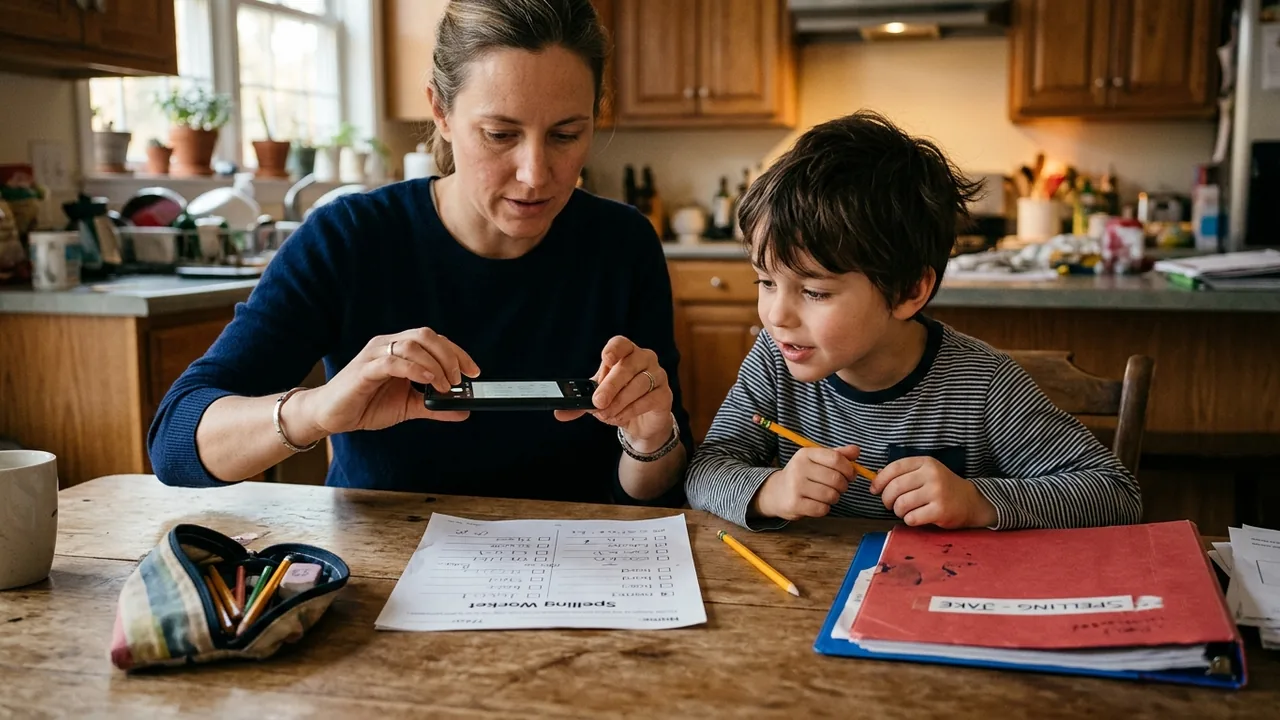
The quick answer: change the action, not the assignment
A spelling worksheet becomes more engaging when the learner has a small decision to make and a word to produce from memory. Instead of asking for another full copy of the sheet, select a short group of words and change the action: sort them, listen and spell, use them in a sentence, hunt for the same pattern, or complete one quick game.
A simple four-step approach
- Finish what the teacher assigned. Do not discard the worksheet.
- Choose three to five words. Use the words that caused a pause or mistake.
- Change the activity. Pick one method that fits the available time.
- End with no-look spelling. Say a word, spell it without the sheet, then check.
Why a useful worksheet can still feel repetitive
A worksheet can organize the week’s words and make the teacher’s expectations clear. The difficulty begins when every practice round asks for the same response: look at the word, copy it, move to the next line. The learner may be busy without having to retrieve the spelling independently.
The goal is not to make every second entertaining. It is to add enough variety that attention returns to the words. Keep the original page as the source of truth, then use one short activity to look more closely at patterns, meaning, sound, or letter order.
Choose a method by time and materials
You do not need to prepare every activity below. Match one method to the evening, classroom, and words in front of you.
| Time | What you need | Try this | Best when |
|---|---|---|---|
| 2 minutes | The worksheet | Cover, say, spell, check | Only one or two words are uncertain |
| 5 minutes | Pencil or highlighter | Mark the difficult letter group, then spell five words | It is a busy school night |
| 8-10 minutes | Scrap paper or cards | Sort words by pattern, then test one word from each group | The list contains useful similarities |
| One short center | Mini whiteboards | Listen, spell, reveal, correct | A teacher is working with a small group |
| One photo | Phone or computer | Turn the exact worksheet words into short digital activities | You want variety without retyping the list |

Seven ways to make a spelling worksheet more fun
1
Choose five difficult words instead of repeating everything
Ask the learner to read down the sheet once and mark words that cause a pause. If nothing is marked, say five words aloud and notice which spellings are uncertain. Practice that smaller set first.
Recall check: Hide all five and spell them in a mixed order.
2
Use cover, say, spell, and check
Look at one word and say it clearly. Cover it with a hand or scrap of paper. Spell it aloud or write it once. Reveal the word, compare letter by letter, and correct only what changed.
Low-prep variation: Let the learner slide the cover and run the check.
3
Sort words by a spelling pattern or sound
Copy each word once onto scrap paper, then group words that share a useful feature: ai and ay, words ending in -ed, one- and two-syllable words, or words with a silent letter. Keep an “other” group for words that do not fit neatly.
Recall check: Choose one word from each group and spell it without looking.
4
Put two or three worksheet words into one short sentence
A sentence gives the words meaning and a reason to write them. Keep it short enough that sentence composition does not replace spelling practice. After writing, compare each target word with the worksheet.
Teacher option: Give pairs the same three words and compare the different sentences they create.
5
Find the difficult letter combination
Ask, “Which part might trick you tomorrow?” Box or underline only that part: the ie in friend, the middle of because, or the ch in school. Say the word, name the difficult part, cover it, and spell the whole word.
Avoid: Turning every letter into a color code. Mark only the part that needs attention.
6
Run a quick word-pattern hunt
Choose one pattern from the worksheet and look for it in a book, classroom notice, cereal box, or another page of homework. Write down one new example. Then return to the worksheet and spell its matching word from memory.
Keep it focused: Hunt for one pattern, not every word on the page.
7
Use a mini whiteboard for listen, spell, reveal
Say a worksheet word without showing it. The learner writes the word, holds up the board, and checks the worksheet. Erase only after discussing the difference. A folded sheet of paper works just as well as a whiteboard.
Classroom option: Use three words as an exit check after a sorting or sentence activity.
Worked example: improve one weekly spelling worksheet
Imagine an elementary worksheet with these ten words:
- Complete the required part. The learner follows the teacher’s worksheet directions first.
- Notice two patterns. Group train, paint, snail under ai, and play, stay under ay.
- Select the difficult five. For this learner, suppose they are said, again, because, friend, school.
- Mark only the tricky part. Underline the surprising letter group in each selected word.
- Use two short sentences. “My friend will stay after school.” “I said we could paint the train again.”
- Finish with a mixed recall check. Hide the list, say the five selected words in a different order, and circle any word that needs one more attempt tomorrow.
The assignment has not changed. The extra practice adds pattern noticing, meaning, and retrieval without asking the learner to repeat all ten words again.
A five-minute spelling option for a busy school night
Five minutes is a starting format, not a rule. Follow the teacher’s assignment and adjust for the learner in front of you. The practical aim is to stop before the short review becomes another full worksheet.
Keep active spelling recall at the center
A learner can recognize a correct word while it is visible and still be unable to spell it independently. For that reason, each activity above ends with the word hidden. The learner hears or thinks of the word, produces the spelling, and then checks the result.
The U.S. Department of Education’s What Works Clearinghouse includes active retrieval and repeated quizzing among its study recommendations. Reading Rockets’ word-study guidance also describes comparing and sorting words so learners investigate spelling patterns instead of treating every word as an unrelated string.
Common mistakes to avoid
- Turning the entire worksheet into a large project. One changed activity is usually enough for a short review.
- Practicing only the easy words. Let mistakes decide which three to five words receive the next round.
- Keeping the correct spelling visible. Add a no-look attempt so the learner must retrieve the letter sequence.
- Making speed the main goal. A fast answer is not useful if careful spelling disappears.
- Correcting every letter while it is being written. Let the learner complete the attempt, compare it with the worksheet, and then revise.
- Replacing the assigned work. Use the teacher’s worksheet as the source and enhancement target unless the teacher says otherwise.
One low-prep digital option

Already have the worksheet?
Upload a photo or page and turn those exact school words into a short game. WordyKid lets you review the extracted words before practice starts, so the activity stays connected to the material the learner actually brought home.
Use the worksheet you already haveYou can also paste a word list instead of uploading a photo.
Add the page
Choose a photo or paste the words.
Check the list
Keep only the assigned spelling words.
Choose a short activity
Practice the same material in a new format.
Reusable spelling worksheet checklist
Save or print this checklist for the next worksheet.
Before practice
- Confirm what the teacher assigned.
- Read the word list once.
- Choose three to five words that need attention.
- Pick one activity that fits the available time.
During practice
- Keep the exact school words as the source.
- Ask the learner to notice a pattern, sound, meaning, or difficult letter group.
- Include at least one attempt with the correct spelling hidden.
- Check after the complete attempt rather than during every letter.
At the end
- Correct each missed word once.
- Keep a short list for the next review.
- Stop when the planned round is complete.
Questions parents and teachers ask
How can I make spelling words fun without making a new worksheet?
Keep the assigned worksheet, but change one short part of the practice. Cover the words for a recall check, sort five words by spelling pattern, use two words in a sentence, or write a difficult word on a mini whiteboard before checking the sheet.
How do you gamify spelling words without losing the learning goal?
Make correct spelling from memory the action that earns a turn, point, clue, or choice. Avoid games where the word stays visible for the whole activity, because recognizing a word is different from spelling it without looking.
How long should spelling practice take at home?
There is no single time that fits every learner or assignment. A focused five-minute round is a practical starting point on a school night. Follow the teacher’s directions, stop while attention is still available, and repeat only the words that still need work.
Is copying spelling words useful?
Copying can help a learner notice letter order or handwriting, but it does not show whether the spelling can be produced from memory. Pair copying with a brief cover-and-spell check.
Keep the worksheet. Improve the practice around it.
A small change in activity can make the assigned words easier to revisit. Start with five words, use one method, and finish with a brief no-look spelling check.
Turn the exact worksheet into short practice